Maximo Mobile
IBM Maximo Mobile for the working day in the field.
MaxIron configures and rolls out IBM Maximo Mobile around dispatch, asset identification, offline work and close-out. We test real shifts with crews and supervisors, agree synchronisation and exception handling, then pilot one trade before wider rollout. Your operations team owns the field process; your IT team owns devices and identity policy.

One shift, both ends of the same minute
07:10 to 15:20, four jobs, one switchroom with no signal
An illustrative shift shaped like the ones we ride before design, on a water network. The hours are illustrative; the order is what we build the rollout around.
In the technician hands
What reaches IBM Maximo
07:10
Four jobs are on the device in the depot car park, ordered by route and access window rather than by work order number.
Nothing new. Dispatch was written the previous afternoon and the device holds it already.
07:25
The switchroom job is accepted. The permit reference sits on the work order, so the isolation is confirmed before anyone drives.
Status moves to in progress, with the person and the time against it.
08:40
The asset barcode is scanned at the switchroom door, confirming this is PU-4021 and not the pump beside it.
Asset confirmed against the work order, which is what keeps readings off the neighbouring asset.
09:15
Signal ends at the switchroom door. Readings, hours and photographs are accepted on the device and held, with their pending state on screen.
Nothing arrives, and the technician can see that the work is queued rather than lost.
10:05
Close-out happens at the asset: failure mode from the nine codes this trade uses, hours confirmed, part scanned, two photographs of the failed seal.
Still queued. The record is complete twelve minutes before the network exists to carry it.
10:20
The queue clears on the walk back to the van. The technician does nothing to make that happen.
Completed work order, meter reading, labour hours, the part issued and two attachments.
13:50
A reactive job is added mid-shift and worked ahead of the last planned one, with its access window checked first.
The reschedule and its reason, so a Friday review can tell an interruption from a planning miss.
15:20
The van is back at the depot with nothing on the dashboard to hand over.
Four completed jobs with evidence attached. The supervisor has no dockets to interpret.
What is being installed, and what is being changed
The application, and the rollout around it
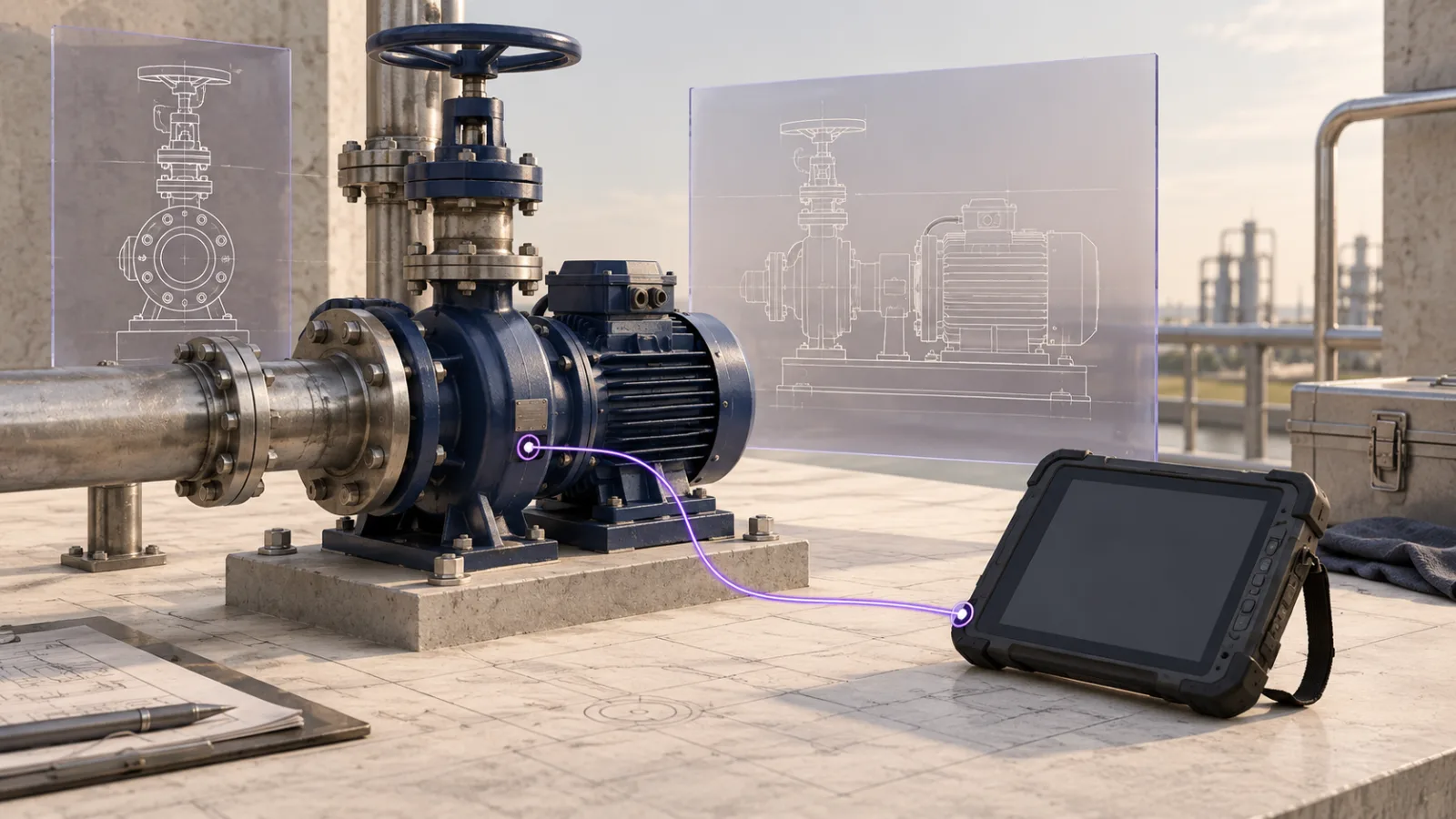
Complete the record where the work happens.
Technicians need the relevant asset, work instructions and permit references at the point of work. We design and pilot the mobile workflow around your sites and shifts, including weak connectivity, capture of completion evidence and a visible route back to Maximo.
Read the field rollout guideThe application
- Product
- IBM Maximo Mobile, the native application in IBM Maximo Application Suite
- Offline
- Work, readings, hours, parts and attachments accepted with no connection, pending state visible to the technician
- Sync semantics
- What queues, what conflicts and what a technician sees while a record is pending, agreed in writing before build
- Permits and isolations
- Reachable from the work order. Where the permit system can be integrated, a job cannot be dispatched without a valid permit, scoped as integration work
- Devices and MDM
- Your procurement and your baseline. We name what survives your environment and what does not
The rollout
- Pilot
- One trade, one region, real work, 6 to 10 weeks including design, build, test and on-site validation
- Offline proof
- Walked on your worst sites in flight mode before the pilot rather than after it
- Adoption measure
- Completion rate on the device, by trade and by site, against the work dispatched
- Wider rollout
- A region or a trade at a time, with supervisors running the daily routine themselves
- Foundations
- Assignments, job plans and the asset register have to hold first, which is process work and data work
Rolled out to utilities, transport, manufacturing and offshore field forces. Devices are not resold: we advise on selection and work to your MDM baseline.
Three words worth settling first
What adoption, offline and a refusal mean here
The pilot agrees measures for completed work, pending synchronisation and exceptions, with evidence reviewed by the operations owner.
- Adoption
- Completion rate on the device, by trade and by site, measured against the work that was dispatched.
- Often read as Logins or app opens, neither of which moves when a technician keeps writing dockets and closing them on paper.
- Offline
- Work accepted at the asset with no connection, queued where the technician can see it, and cleared without anyone doing anything to it.
- Often read as A cached read-only view of the job, which still sends someone back to a desk to close the work.
- A refusal
- A defect report against the design until proven otherwise. Most we have investigated were a task the device could not complete, a site with no coverage, or a job plan that did not match the job in front of the technician.
- Often read as A training gap, which is the assumption behind sending a reminder to a supervisor.
The shape of a first pilot
What the first ten weeks contain, and what they need from you
-
Pilot duration
6 to 10 weeks
Design, build, test and on-site validation for one trade or one region.
-
Shifts we ride first
3 to 5
On the sites you expect to be hardest, before any design decision.
-
Trades in the pilot
One
Under a named supervisor who is allowed to stop it.
-
Tasks on the device
Agreed in writing
Before anything is built. Long procedural and diagnostic work often stays on a tablet or at a desk.
-
Exit measure
Completions, not logins
Reported by trade and by site from the dispatched work.
-
Where this runs today
Airside at a UK regional airport
Work orders bound to permit-to-work and runway closure windows, with offline capture and barcode lookup.
What this needed from the client
- A named operations owner, alongside the IT owner
- Access to real shifts, including the sites where you know there is no coverage
- Device procurement, enrolment and the MDM baseline, which stay with your IT team
- One supervisor per pilot trade, with time protected for the daily routine
Boundaries
Three boundaries on a mobile rollout
Each is cheaper to settle in a scoping call than in month four of a rollout.
The device carries the process the field already works to
Where assignments are wrong, job plans describe work nobody does, or the asset register disagrees with the plant, a phone makes all of it visible faster and to more people. When the defect sits upstream of mobile, the programme is resequenced.
The task list for the device is settled before anything is built
Long procedural documents, complex planning and multi-hour diagnostic work often belong on a tablet or at a desk, and a few things stay on paper for good safety reasons. That list is agreed in writing, trade by trade.
Hardware procurement and MDM stay with your organisation
We recommend devices that hold up for your technicians, name the ones that will fail there, and work with your IT team on enrolment and the security baseline. Procurement, ownership and the support contract remain yours.
Maximo Mobile rollouts, frequently asked questions
- What is IBM Maximo Mobile?
- The native mobile application inside IBM Maximo Application Suite for work orders, inspections and asset checks on a phone or tablet, including offline. It is the supported direction within MAS and the product we standardise on for rollouts.
- How do you prove the offline case?
- On your worst sites, with the device in flight mode, before the pilot. We walk the plant rooms, risers and remote assets and agree in writing what queues, what conflicts, and what the technician sees while a record is pending.
- How long does a rollout take?
- A pilot for one trade or region runs 6 to 10 weeks including design, build, test and on-site validation. Wider rollout follows a region or a trade at a time, with completion rates tracked per trade rather than estimated.
- How do you handle permits, isolations and safety documents?
- By establishing where they live before design. Some estates hold them in Maximo, some in a separate permit system, some on paper in a control room. The reference has to be reachable from the work order, and where the permit system can be integrated we make a valid permit a condition of dispatch. That is integration work, scoped alongside the rollout.
- How does this relate to MaxIron Mobile and MaxIron Nova?
- IBM Maximo Mobile is the supported IBM application in MAS and what we roll out as a service. MaxIron Mobile is MaxIron-built technician software with its own screens, queue and Nova layer. MaxIron Nova is the display-first wearable workspace inside that product. They write to the same work orders.
Discuss a pilot for one field team.
Bring a representative shift, device policy and offline locations. We will identify the dispatch, close-out and synchronisation scenarios the pilot needs to prove.
Bring this to the first call
- The trade or region you expect to be hardest, and why you expect it
- A blank copy of the paper docket or job card your technicians still carry
- Where permits, isolations and safety documents live today
- The sites where you already know there is no signal
- The names of the supervisors who would run the pilot